Furniture City Uganda
Furniture retail where the browsing experience has to feel like a showroom and the mechanics have to feel like a shop.
The brief this work answers
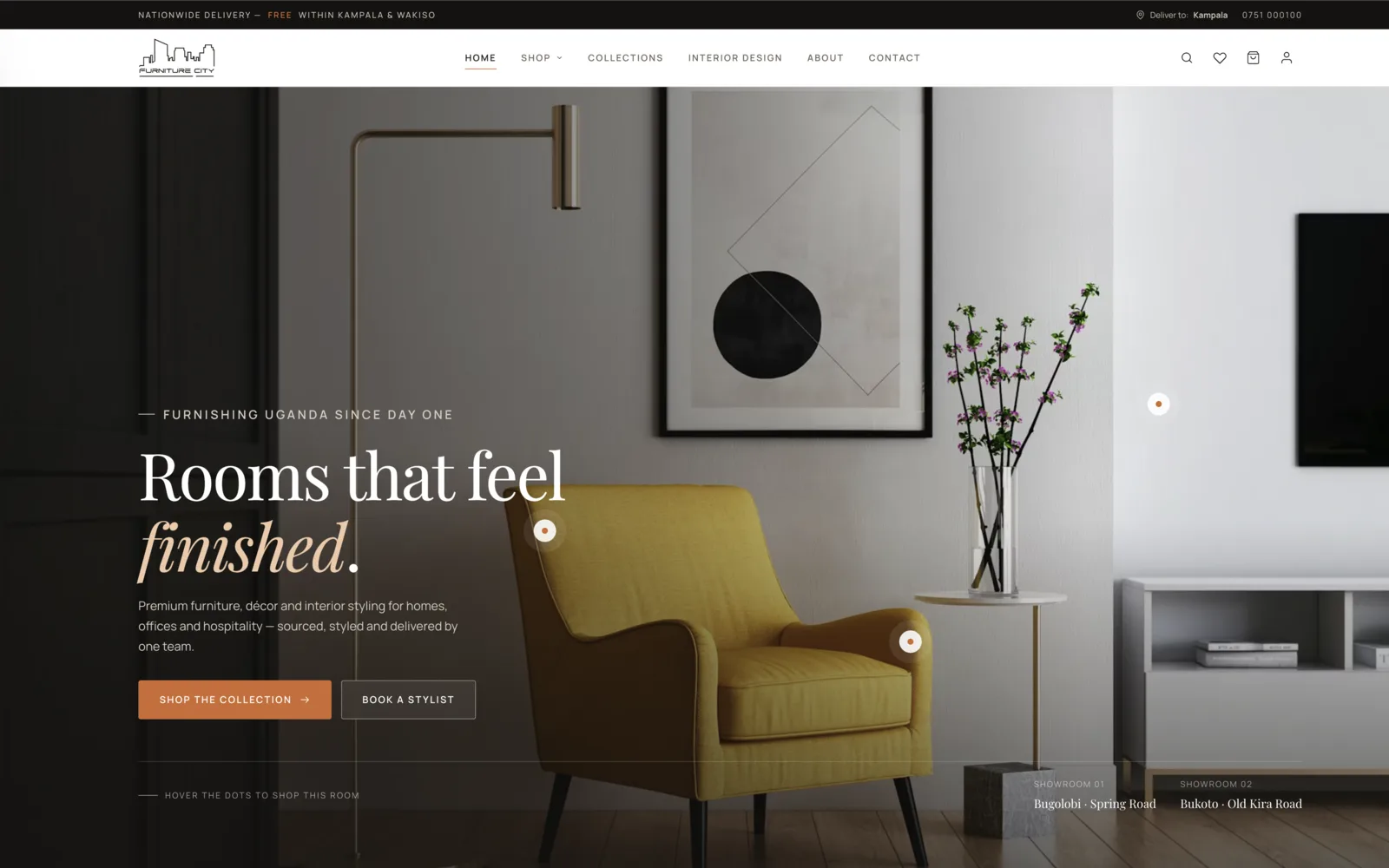
Furniture City Uganda sells premium furniture, luxury décor, office and hospitality furnishing, interior styling and bespoke pieces, with showrooms in Bugolobi and Bukoto.
High-consideration furniture has an awkward digital problem. The purchase is emotional and slow, often finished in a showroom — but the site still has to behave like real commerce, because a customer who cannot save a sofa will not remember it.
Approach
The interface runs two layers. The editorial layer is styled and photographic: rooms, not cut-outs, with a display serif setting a showroom register. The commerce layer underneath is conventional and quick — catalogue browsing, filtering, search, wishlist and cart, with a checkout flow that does not fight the customer.
The wishlist matters more than the cart for this category. It is where a slow purchase actually lives: the shortlist a customer builds over a fortnight and brings into the showroom on their phone. It is given equal weight in the interface rather than being hidden behind an account.
Showroom locations, an interior design service, a journal and a newsletter surround the catalogue, because the business converts across both channels and the site has to hand a customer to the physical space as willingly as to the basket.
Outcome
A retail site that keeps a luxury register while carrying real commerce mechanics — and treats the showroom as a destination rather than a competitor.
The measure of it is whether a shortlist survives a fortnight of thinking. The wishlist is built to make sure it does.
The site is live — open it and use it.
View live site